Dalsland is one of those regions in Sweden we love returning to again and again, not least because Mats is originally from here, which gives us a personal connection to the region. At the same time, it’s an area with a lot to offer and one that many travelers still overlook when planning a trip to Sweden. Just two hours from Gothenburg to Dalsland, where a landscape awaits you that feels a bit like a „Best-of Scandinavia“: dense forests, countless lakes, red wooden houses, and a lot of peace. Despite growing popularity in summer, people spread out so it doesn't feel crowded. In our Dalsland Guide, we'll show you the most beautiful nature reserves, sights, and activities, and give you tips you need to know for your trip through Dalsland. An overview of all mentioned sights, nature reserves, and activities can also be found on our Google Maps map further down in the article.
In this article
Dalsland at a Glance: Numbers, Facts & Highlights
- Dalsland is located in western Sweden between the coastal region of Bohuslän and the country's largest lake, Vänern. In the north, the region borders Norway and Värmland.
- Dalsland is one of Sweden's most lake-rich regions; here you are never far from water. Over 1000 lakes are spread across an area of around 3,700 km², many of them connected by the approximately 254 km long Dalsland Canal.
- With about 14 inhabitants per km², Dalsland is comparatively sparsely populated for southern Sweden. While the north is more characterized by forests, the east is dominated by an extensive lake landscape.
Getting to Dalsland
Gothenburg is the perfect starting point for a trip to Dalsland. You can easily reach Gothenburg by plane, train, or by car .
Getting to Dalsland by Car
The easiest and most flexible way to get there is by car, for example after taking a ferry to Gothenburg.
- From Gothenburg, you can reach Dalsland in about 2 to 3 hours by car.
- By car, you are flexible and can explore Dalsland at your own pace.
Getting to Dalsland by Public Transport
Do you not have a car available or prefer to travel by public transport? That's also possible:
- Take the train from Gothenburg towards Mellerud (1 hour) or Åmål (1.5 hours). From there, you can continue by regional buses.
- It's best to plan your destinations, including bus connections, in advance. The bus network is generally well-developed and connects even smaller towns, but many bus routes do not run very frequently, and not all attractions are accessible by public transport.
- Plan your trip on the website of Västtrafik or in the Västtrafik App. You can also buy tickets directly there.
The Most Beautiful Nature Reserves in Dalsland
Dalsland has an incredible amount of nature. Here you will find dense forests, sparkling lakes, and a lot of tranquility. The region is particularly suitable for hiking, paddling, or cycling. Below, we show you some of our favorite places when it comes to being outdoors.
Kroppefjäll – Hiking in pristine nature
Kroppefjäll is the largest contiguous nature area in southern Sweden and perfect if you enjoy hiking. The landscape is varied, with open highlands, dense forests, lakes, and moors alternating.
What you can do on Kroppefjäll:
- Hike on one of the well-marked hiking trails. In total, over 100 km of hiking trails run through Kroppefjäll.
- A beautiful and not too demanding hike is the 7 kilometer Blue Trail No. 3, which you can find on the linked map .
- Thanks to Sweden’s Right of Public Access , you can pitch your tent in nature and turn your hike into a multi-day adventure, for example along the Kroppefjällsleden, which stretches for a total of 54 kilometers.
- Go paddling on one of the lakes in Kroppefjäll. You can rent canoes, kayaks, or a SUP from Ragnarud .
Maps with hiking routes are available at various sights and tourist information centers (for example in Håverud). On the website of Ragnarud, a location that is a mix of restaurant, campsite, and event venue, you will also find good Online maps.


Yttre Bodane – archipelago Feeling on Lake Vänern
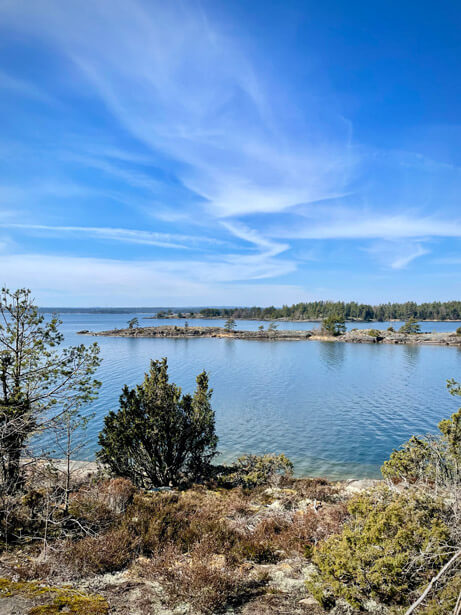
Yttre Bodane completely surprised us and is, in our opinion, one of the most beautiful nature reserves in the region. The shoreline of Lake Vänern, with its smooth rocks and small bays, almost feels like the archipelago along Sweden’s west coast. Thanks to the many coves and small islands, the lake is much calmer here, making it perfect for kayaking or canoeing.
What you can do in the Yttre Bodane nature reserve:
- Hike one of the shorter trails (1–4 km) or combine them into a longer loop.
- Swim in one of the many small coves.
- Paddle in a canoe or kayak through the archipelago-like landscape. The water is only about 400 meters from the parking area.
- Have a picnic right by the water.
Sörknatten Nature Reserve – A Short Hike with Big Views
A rather light and short, but still very beautiful hike awaits you in the Sörknatten Nature Reserve. The narrow path leads slightly uphill, and once you reach the top, you will be rewarded with a magnificent view over the surrounding forests and lakes. By the way, Sörknatten is said to be particularly beautiful at sunset. For the way back, we recommend taking the same path, as the alternative route runs along the road.
Sights, Activities, and Excursions in Dalsland
Håverud Aqueduct – A Piece of Engineering History
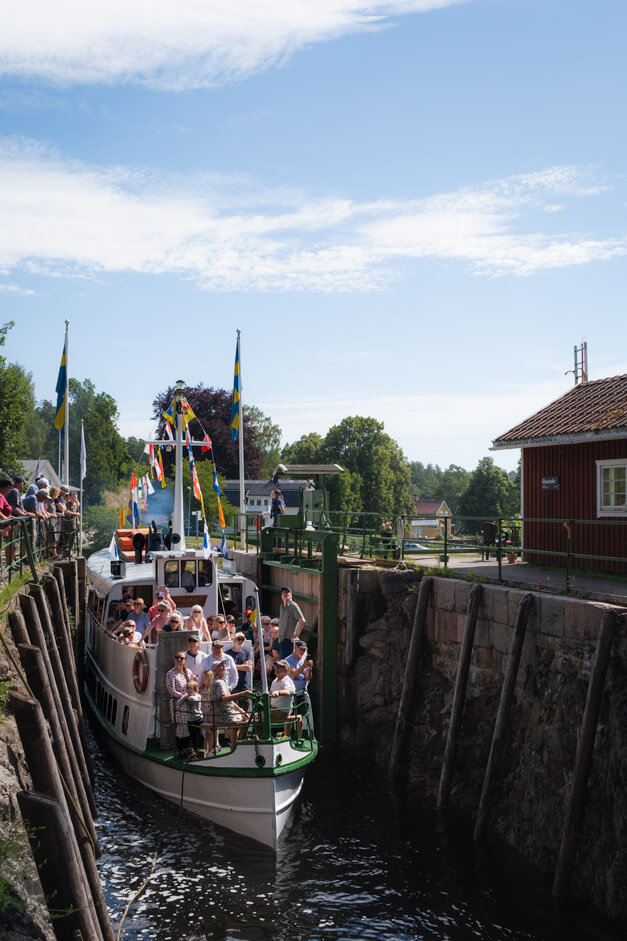
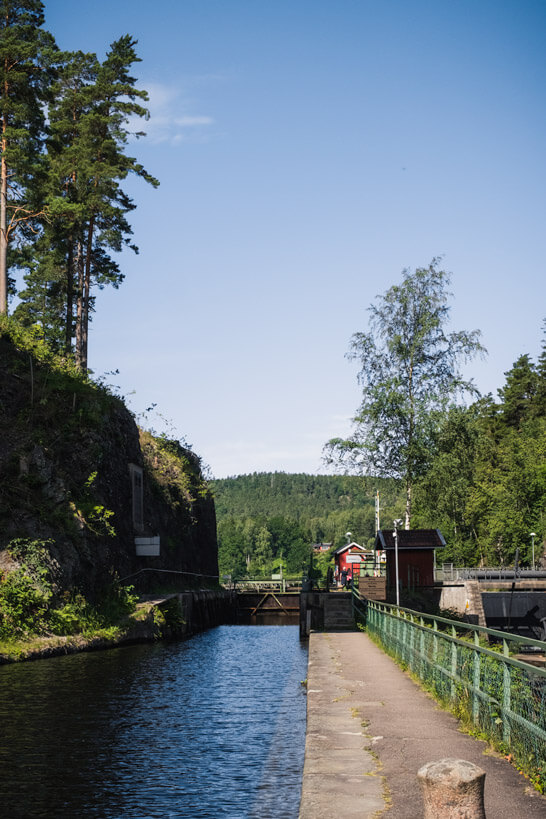
The aqueduct in Håverud is a true feat of engineering in Dalsland. As part of the 254 km long Dalsland Canal, ships have been transported from one lake to the next through a lock and over a steel bridge for over 150 years. Especially in the summer months, there is a good chance of experiencing the lock in action, as the Dalsland Canal is then heavily used by excursion boats and canoeists.
What you can do in Håverud:
- Watch the ships travel from one lake to the next through the lock and over the steel bridge.
- Learn more about the history of the aqueduct in the museum.
- Stroll along the lake.
- Eat a shrimp sandwich at Håfveruds Rökeri och Brasseri
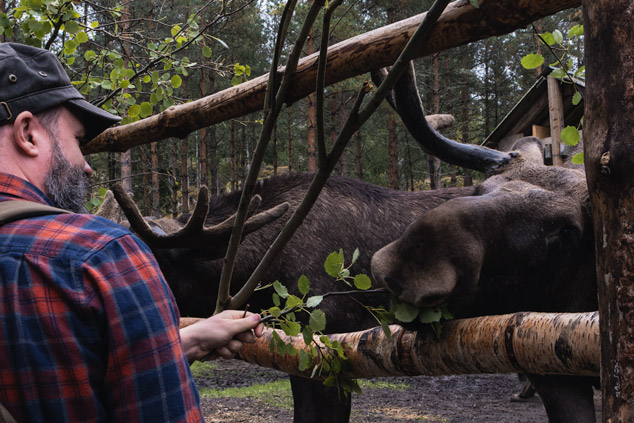
Experience moose up close at the Dalsland Moose Ranch
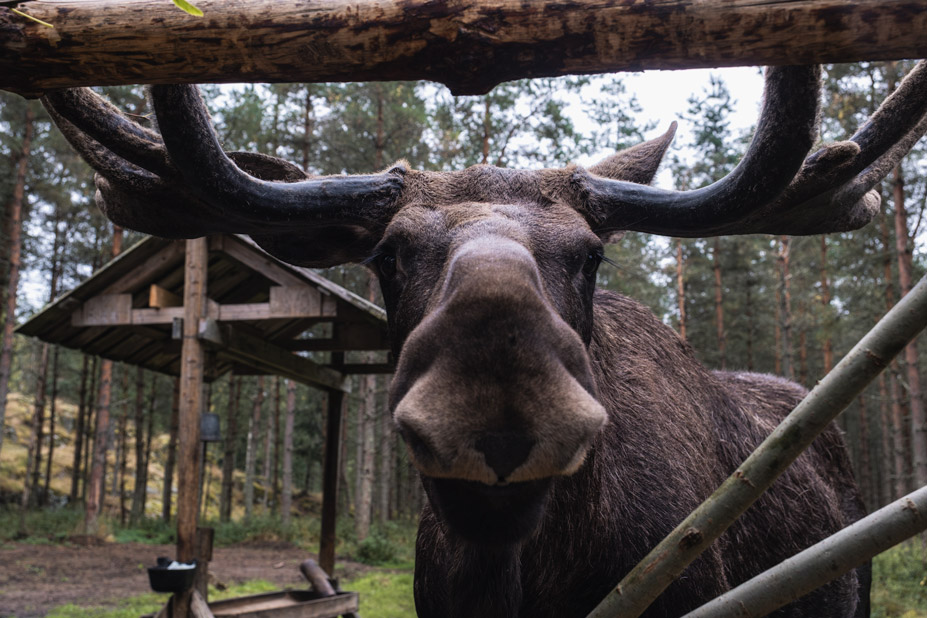
At the Dalsland Moose Ranch near Bengtsfors, you can experience moose up close. In the summer, feedings take place several times a day, for which you can register online.
What you can do at Dalsland Moose Ranch:
- Participate in one of the feedings, where you can feed the animals fresh branches yourself and learn more about moose.
- Take a walk through the surrounding area.
- Eat a waffle in the associated café.
Especially for children, it is a special experience to see the animals up close and to be able to feed them yourself, but we also had a lot of fun on our visit and learned a lot about elk. For your own refreshment, the associated café offers delicious waffles.
Paddling on the Dalsland Canal
The Dalsland Canal is a 254 km-long waterway that connects several lakes in Dalsland and Värmland. It is considered one of the most beautiful waterways in Europe and one of the best places for a multi-day paddling trip. You can explore it on your own or as part of a guided tour. Thanks to Sweden’s Right of Public Access , you can pull your canoe ashore almost anywhere and pitch your tent.
For us, a paddling tour on the Dalsland Canal has long been on our wish list. Sabrina has written a great report about her 1-week tour on her Blog Couchflucht ..
Cafés and flea markets in Dalsland – typically Swedish
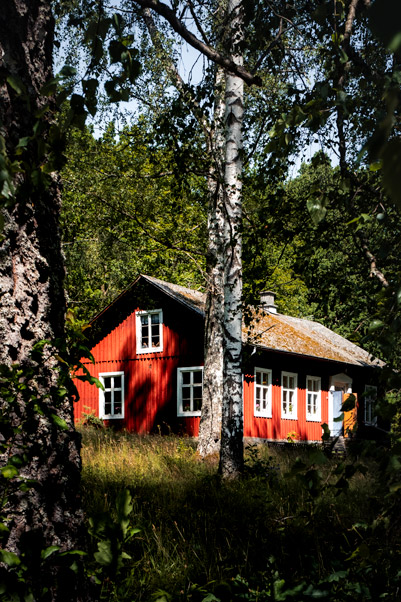
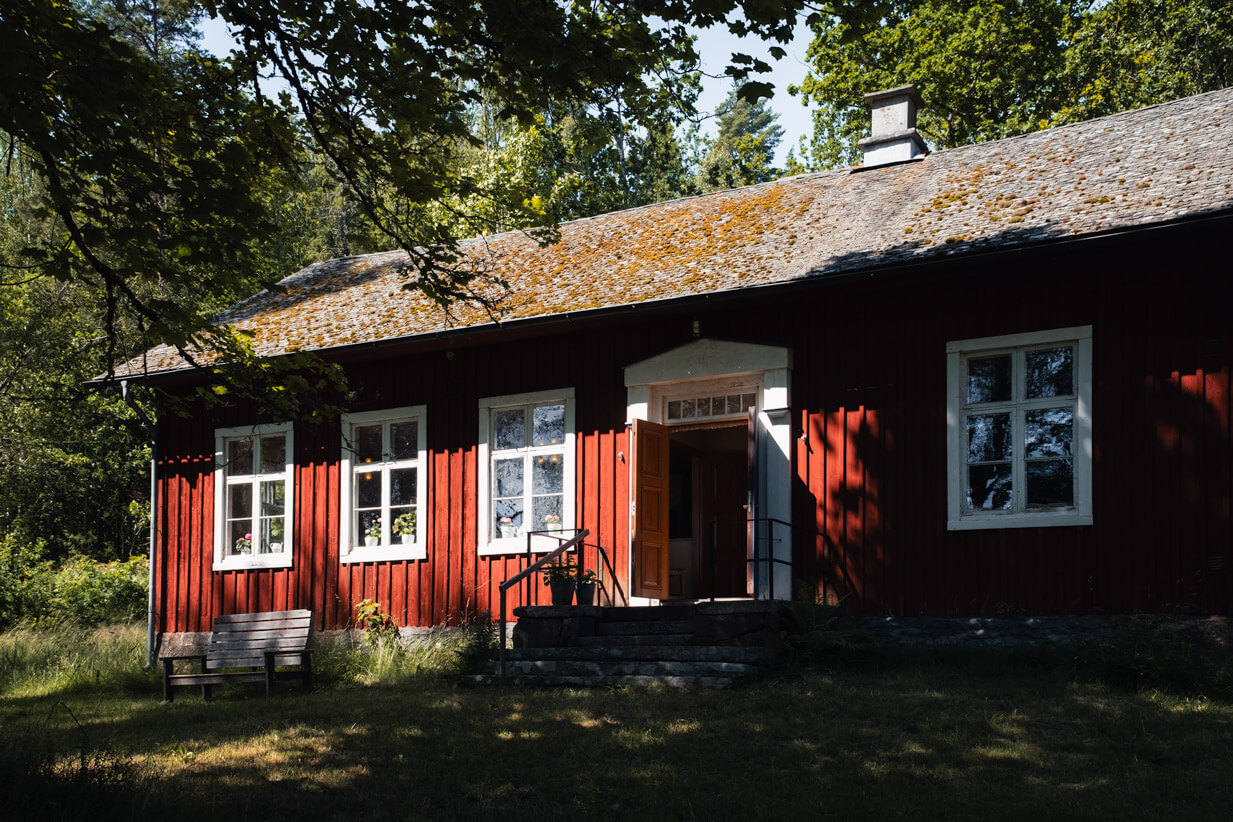
Besides nature, it is above all the small, individual cafés and flea markets that make a road trip through Dalsland so special for me. Especially in the summer months, they open everywhere in the region, mostly on weekends. Many of them are located off the main roads and are easy to overlook. You'll mostly discover them by chance through the handwritten signs indicating a „Café“ or a „Loppis“ (flea market). So be sure to keep your eyes open!
Many cafés are housed in old, typical Swedish houses and serve homemade cakes and cinnamon buns. You'll usually find „Loppisar,“ flea markets, in old barns. If you like to browse, you should stop at one or two, maybe you'll find a special souvenir from your Swedish holiday.
An overview of our favorite cafés and flea markets can also be found on our Google Maps map further down in the article.
2-3 days in Dalsland – Road trip route at a glance
Below you will find our suggestion for a 2-3 day trip through Dalsland. You can also read about this in detail in our post Weekend in Dalsland: 2-day Itinerary, Tips & Sights .
Day 1: Arrival & Relaxing by the lake
Arrival from Gothenburg to Dalsland (approx. 2-3 hours) and check-in at Upperud 9:9 or at the Campsite in HåverudThe first day is all about settling in: relaxing by the lake, swimming, enjoying a sauna, or taking a short canoe trip.
Day 2: Håverud Aqueduct & Yttre Bodane Nature Reserve
After breakfast, visit the Håverud Aqueduct, Dalsland’s most famous attraction and part of the Dalsland Canal. Afterwards, continue to the Yttre Bodane nature reserve on Lake Vänern, featuring an archipelago-like landscape, swimming coves, and short hiking trails. Return to your accommodation in the evening.
Day 3: Hiking in Kroppefjäll & Return
On the third day, go hiking on Kroppefjäll, the largest continuous nature area in southern Sweden, known for its forests, lakes, and wetlands. Afterwards, drive back to Gothenburg, with an optional stop at Nuntorps Gård for pizza or continue your journey through Sweden.
Dalsland Map with all highlights
All our tips from this post can be found in our Google Maps map. There we have marked nature reserves, sights, and many other highlights in Dalsland for you. We have also included some of our favorite cafés in Dalsland, which we can particularly recommend.
Best time to travel for a Dalsland trip
Dalsland in Summer (June – August)
Summer is the best time to visit Dalsland. This is when temperatures are at their warmest, the days are long, and most attractions, cafés, and flea markets are open.
Of course, summer is also the most popular travel season, and Sweden has seen a strong increase in visitors in recent years. Well-known sights such as the Håverud Aqueduct attract the most people. However, in nature, visitors are well spread out, so we have never felt that Dalsland is overcrowded.
Dalsland in the off-season (spring and autumn)
The off-season is also a good time to visit Dalsland, although it can be significantly colder during the day and especially in the evenings. In addition, many cafés and restaurants are still closed, and for attractions such as the Dalsland Moose Ranch, you need to book in advance. Outside the summer months, it is therefore important to always check opening hours early.
Practical travel tips for your Dalsland trip
Mosquitoes
Dalsland has over 1,000 lakes, which also means there are quite a lot of mosquitoes in summer. While it’s not as bad as in northern Sweden, they can still be quite annoying, especially in the evenings. In spring and late summer, there are usually significantly fewer mosquitoes. To help you enjoy your Dalsland road trip without any hassle, here are a few useful tips:
- Bring mosquito repellent and wear light-colored, long clothing in the evenings.
- Install mosquito nets on the windows of your camper.
- Dalsland is considered a TBE risk area in Sweden, and especially from spring to autumn, there are many ticks. Even though tick season peaks during the warmer months, ticks can be active all year round.
Ticks
Dalsland is considered a TBE risk area in Sweden, and especially from spring to autumn, there are many ticks. Even though tick season peaks during the warmer months, ticks can be active all year round.
- Make sure to get vaccinated against TBE well in advance of your trip.
- Check yourself for ticks every evening and remove them immediately, because the longer a tick is attached, the higher the risk of a Lyme disease infection.
- Pack a pair of tweezers to remove ticks.
Opening hours of sights, cafés and hotels
Most tourists visit Dalsland in the summer. The opening hours of many attractions and even some hotels and cafés are therefore focused on the summer months. Please note the following information if you are traveling during off-season.
- Check opening hours of restaurants, cafés, and attractions in advance.
- Book activities in advance if necessary (e.g., a visit to the Dalsland Moose Ranch).
Wild camping & free standing
Thanks to the Swedish right to public access (Allemansrätten), you can stay overnight almost anywhere in nature in Dalsland – one of the most beautiful ways to experience the region. However, you should definitely observe a few important rules and special features for wild camping and free standing when wild camping or staying off-grid.
- The Allemansrätten applies to non-motorized movement and overnight stays in nature, for example, with a tent or bivouacking. It does not apply to cars, campers, or other vehicles. With these, you must drive to designated rest stops or motorhome parkings that explicitly allow overnight stays.
- Do not stay overnight in the immediate vicinity of houses. As a rule of thumb, you should neither be heard nor seen.
- Stay a maximum of one to two nights in the same place.
- Do not leave any trash behind.
Cash & payment in Dalsland
In Sweden, cashless payment is the standard, even for small amounts. Even in small cafés and flea markets, card payment is often the only option. You will hardly ever need cash in Sweden.
Fire & safety
Climate change is also increasingly noticeable in Sweden, and nature has suffered from extreme drought more and more frequently in recent years during the summer. For this reason, open fires may be prohibited. Be sure to inform yourself about the current local regulations and adhere to them.
FAQ Dalsland Trip
Is a trip to Dalsland worthwhile?
Yes, especially if you are looking for nature and tranquility and enjoy being outdoors. Dalsland offers many lakes and forests and provides many opportunities for hiking, cycling, or paddling.
How many days should I plan for Dalsland?
For the most important highlights, 2 to 3 days are sufficient. If you have more time, Dalsland offers enough options and it is worth dedicating a little more time to the region.
When is the best time to travel to Dalsland?
The best time to travel is from June to August. Then the days are long, the weather is most stable, and most cafes and sights are open. Spring and autumn are quieter, significantly cooler, and some restaurants, cafes, and sights may be closed.
Can you wild camp in Dalsland?
Yes, thanks to the Swedish right to public access (Allemansrätten), overnight stays in nature with a tent or bivouacking are permitted. However, this does not apply to vehicles such as campers or cars. With these, you must use official parking or rest areas.
Do you need a car in Dalsland?
A car is recommended, as many destinations such as hiking areas, swimming spots, but also small cafes are difficult to reach by public transport. Alternatively, you can travel by train and bus and then travel with Västtrafik buses in Dalsland. However, you will be less flexible then.
What are the most beautiful sights in Dalsland?
The highlights include the aqueduct in Håverud, the Kroppefjäll nature reserve, the Yttre Bodane nature reserve, and the Dalsland Canal.