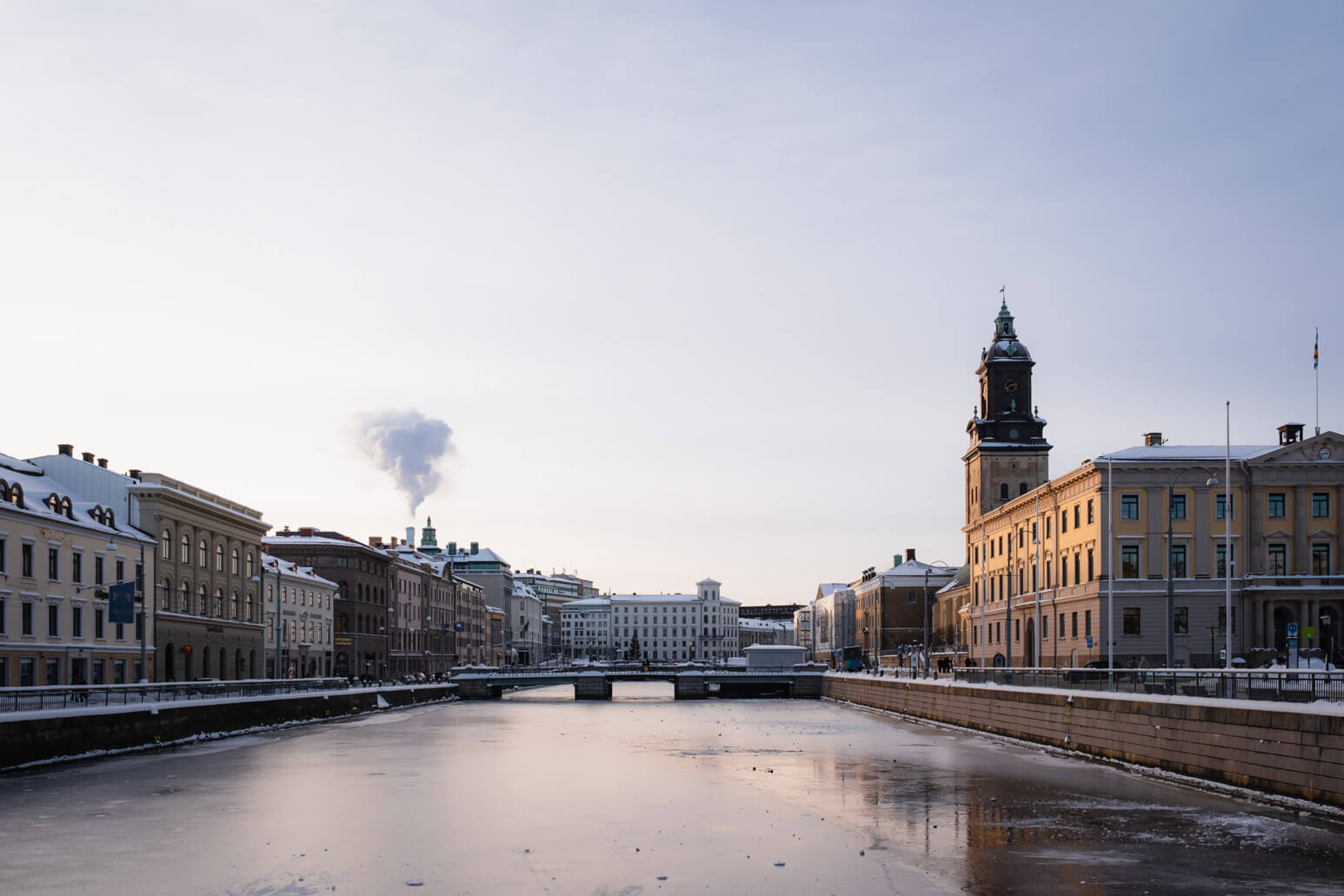
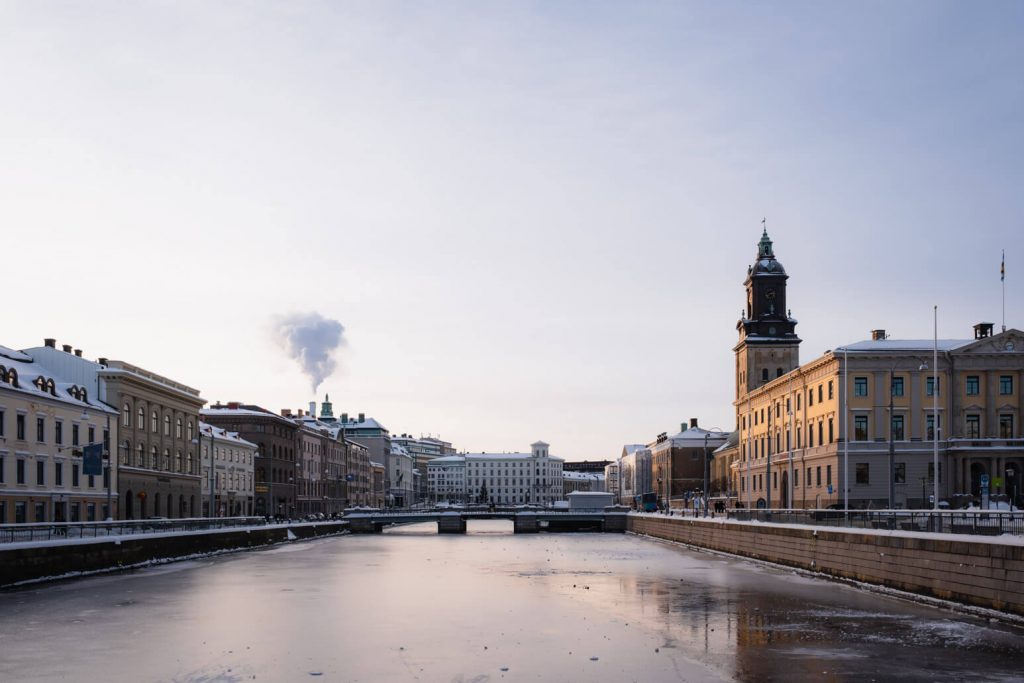
While most people probably think of Stockholm first when planning a city trip to Sweden, Gothenburg has consistently delighted us over the years. Perhaps it is because of the cozy cafes where you can easily spend a rainy afternoon, the proximity to the water, or the fact that nature is never really far away. Gothenburg feels more relaxed than many other major cities, and did you know that Gothenburg is considered one of the most sustainable cities in the world?
We have lived in Gothenburg for several years ourselves and are now living here again. The tips in this guide are therefore not based on a short city trip, but on our everyday life here in Sweden. In addition to well-known sights such as Haga, Slottsskogen, and the city center, we want to use this guide for Gothenburg in 2 days to show you a few other sides of the city, such as Majorna, Lindholmen, and the Änggårdsbergen nature reserve.
In this post, you will find out how to optimally plan your Gothenburg city trip, including sights, restaurants, cafes, island tips, and a well-thought-out itinerary for your perfect city trip.
Note: Links marked with an * are affiliate links. If you purchase something through this link, we receive a small commission. The price remains the same for you.
In this article
Our Perfect Itinerary for 2 Days in Gothenburg
When friends or family visit us, we almost always recommend this route. It combines Gothenburg's typical sights with a few neighborhoods that many people usually overlook. This way, you get a good impression of what makes Gothenburg so special in just two days.
By the way, you can walk most of the route if you want to.
Day 1: City center, cozy cafes, and perhaps the most beautiful viewpoint in the city
- City center with Stora Saluhallen, Trädgårdsföreningen and Magasinsgatan
- Haga
- Skansen Kronan
- Linné
Tag 2: Parks, Majorna and a choice between maritime Gothenburg or pure nature
- Slottskogen
- Majorna
- Röda Sten Kunsthalle
- Eriksberg, Lindholmen & Ringön (Option 1)
- Botanical Garden & Änggårdsbergen Nature Reserve (Option 2)
Day 1 in Gothenburg: Haga and the most beautiful corners of the city center
Morning: Discovering Gothenburg's City Center
Start your first day in the heart of the city in the Inom Vallgraven neighborhood, where many of Gothenburg's sights are located just a short distance from each other. For a relaxed breakfast, we recommend Café Fröken Olsson with its colorful tiles and a large breakfast selection. On weekends, they offer a popular and varied breakfast buffet. Alternatively, Viktors Kaffe or Brunchoteket are also good choices for a cozy start to the day.

From here, it is only a few minutes' walk to Kungsportsplatsen and Kungstorget, where the historic market hall Stora Saluhallen is located. The market hall is one of the city's older buildings and was built between 1888 and 1889. Here you will find local specialties, fresh produce, and several stalls where you can eat on-site.
Via the Kungsportsbron, you will then reach the park Trädgårdsföreningen, one of the most beautiful and best-preserved park complexes in Europe. Although the park is relatively small, you quickly forget that you are still right in the middle of the city center. With its old trees and flowerbeds, the park is a true green oasis. By no means should you miss the historic Palm House! By the way, you can visit it free of charge.
Leave the park again towards Kungsportsplatsen and stroll past the Stora Teatern and further through Kungsparken. This park is particularly popular in the summer with locals, who come here to relax in the sun or play mini-golf.
Via the Vasabron, you will reach Grönsakstorget and from there continue onto Magasinsgatan. Compared to the city center, it is quieter here, and between the old brick buildings, you will find small boutiques, concept stores, and some of our favorite restaurants in the city.

Our recommendations for lunch:
- Fiskbar 17: excellent fish dishes with an affordable lunch menu during the week, as well as on Saturdays.
- The Barn: for us the best burger in Gothenburg (also good vegetarian and vegan options). If you want to eat here in the evening, it's best to reserve early, as weekends are often fully booked.
- Koie Ramen: kleines, aber sehr gutes Ramen Restaurant.
We hope you still have room for dessert afterwards and would highly recommend a detour to Göteborg Gelaterian at Grönsakstorget. The ice cream has won multiple awards, and I must confess, for me, it is also one of the best I have ever eaten. The flavors change regularly, but our absolute favorites include mango-passion fruit, hazelnut, and lemon cheesecake. Especially when the weather is nice, a long line forms quickly, but it is well worth the wait. Promised!
Alternatively, you can treat yourself to a fika at Da Matteo, preferably with cinnamon buns. The large outdoor area is perfect for sunny days, but there is also plenty of space inside.
Afternoon: Feskekôrka, Haga & Skansen Kronan
After lunch, you should make a quick detour to the Feskekôrka (Fish Church). Gothenburg's fish market hall bears this name because the building's architecture resembles a Neo-Gothic church. Here you can buy fresh fish and seafood or eat something right on-site.
From here, it is only about 10 minutes to the Haga neighborhood, one of Gothenburg's most famous sights. Here, the atmosphere changes significantly. The asphalt is replaced by cobblestones, and the scent of freshly baked cinnamon buns wafts from the cafes. Small boutiques and plenty of cafes are hidden within the historic wooden houses.
Ein absolutes Highlight sind die berühmten Hagabullar, riesige Essteller große Zimtschnecken, die du im Café Husaren or Café Hebbe Lelle bekommst. Am besten lässt du dir eine einpacken und nimmst sie mit hoch zum Skansen Kronan, a former fortification above Haga. Once you reach the top, you will be rewarded with one of the most beautiful views over the city. Especially on warm summer evenings, the people of Göteborg like to sit here with a picnic blanket on the grass and watch the sun slowly set. Definitely a tip if you come by again a little later. Evening: Linnéstaden & Göteborg's nightlife district.


Evening: Linnéstaden & and the Långgatorna
For dinner, you have a wide selection of restaurants and bars around Linnégatan as well as the adjacent Andra Långgatan and Tredje Långgatan . Among others, we can recommend the following:
- Dirty Records: vegetarian restaurant with a relaxed atmosphere right on Andra Långgatan.
- Silvis Restaurang: nice restaurant with Palestinian cuisine. Very delicious.
- Walk in the Park: Roman-style pizza accompanied by natural wines in a cozy setting on Linnégatan.
- Ölstugan Tullen: classic pub on Andra Långgatan with affordable and good dishes.
Andra Långgatan is also one of our favorites for a relaxed evening. Here you will find many different bars and pubs, so you can spontaneously choose where you want to end the evening.
Day 2 in Gothenburg: Linné, Slottsskogen, alternative neighborhoods, and the green side of the city
Morning: Breakfast in Linné, Slottsskogen and Majorna
You can start your second day in Gothenburg where you ended your first. Around Linnégatan you will find many cafes and popular brunch restaurants that are perfect for a relaxed breakfast. We rarely go out for breakfast, but the following were recommended to us by friends:
- Kafé Magasinet: A mix of cafe, restaurant, and bar on Tredje Långgatan. Breakfast in the morning, lunch at midday, and a lively meeting point in the evening.
- Brunchoteket Linnégatan: Large selection of breakfast and brunch dishes, from savory to sweet.
- Bagels and Bönor: As the name suggests, you will find bagels and coffee here.
Frisch gestärkt geht es weiter in den Slottskogen, den größten Stadtpark Göteborgs. Er ist das grüne Herz der Stadt und besonders im Sommer ein beliebter Treffpunkt für die Göteborger. Hier wird gejoggt, gepicknickt oder einfach die Sonne genossen.
In the park there are cafés, an ice cream parlor, a mini golf course, and a small, free animal park with moose, seals, penguins, and some other animals.
From Slottsskogen, heading northwest takes you directly to Majorna. The former working-class neighborhood is now a creative and alternative district and is definitely one of our favorite neighborhoods in Gothenburg. Among colorful wooden houses, small cafes, and independent boutiques, you get to experience more of everyday Gothenburg off the typical tourist path. Instead of ticking off sights, it is worth simply strolling through the streets here and discovering small boutiques, second-hand shops, and cafes.
While the city center and Haga are often very busy and probably visited by all tourists, it is much quieter here, even on weekends. The best way to discover Majorna is by strolling through the streets around Mariagatan. In Majorna you will also find two of our favorite cafes/bakeries:
- Cum Pane: Bakery with good bread and delicious cinnamon buns. Little space inside, but there is a small outdoor area with tables.
- Café Wærnet: Great cafe with good coffee and very good cinnamon buns and other treats.
Should it already be time for lunch, you will also find what you are looking for in Majorna:
- Luckans Fisk: Fish dishes and changing lunch specials during the week. Best to check the menu online.
- Enoteca Maglia: Italian restaurant with lunch offers during the week as well as on weekends.
- Café Hängmattan: A mix of restaurant, bar, and event venue with a vegetarian lunch buffet from Monday to Friday.
Afternoon and evening: Gothenburg's maritime side or pure nature
For the afternoon, we have put together two options for you, depending on whether you want to discover Gothenburg's maritime side or prefer to experience more nature.
Option 1: Gothenburg's maritime side with Röda Sten, Eriksberg and Lindholmen
If you want to get to know Gothenburg's maritime side, the afternoon takes you to the water. From Majorna, you walk westwards to the Röda Sten art gallery, which is located directly beneath the imposing Älvsborg Bridge. The former boiler house is now a center for contemporary art. Even if you are not a big art fan, a visit is worthwhile just for its special location on the banks of the Göta älv.
Along the water, you will reach the Klippan ferry station after about 10 minutes, from where you can take the ferry to the other side. While modern residential neighborhoods become visible on the opposite bank, ferries, sailboats, and cargo ships pass by on the Göta älv. Get off at Eriksberg and walk a short distance west to see the iconic Eriksbergkran. From Eriksberg, a wide waterfront promenade leads toward Lindholmen.
Both Eriksberg and Lindholmen have undergone an enormous transformation in recent years, which continues to this day. This used to be the heart of the shipbuilding industry in Gothenburg. Where shipyards once shaped the cityscape, today you find modern residential neighborhoods, restaurants, cafes, and beautiful waterfront promenades. The contrast between old and new is present everywhere.
The former shipyard district Lindholmen is today a hub for technology, mobility, research, and education. Where shipyard workers once built vessels, modern office buildings, cafes, and corporations now shape the cityscape. At the same time, cranes, harbor facilities, and historic workers' houses still recall the industrial past. On the hill Slottsberget stand historic workers' houses from the late 19th century, which provide a stark contrast to the modern residential areas. It is well worth taking a walk through here. Also impossible to miss is the city's new landmark: the Karlatornet. Standing at 246 meters, it is not only the tallest building in Gothenburg, but also the tallest skyscraper in Scandinavia.


For a break, Café Alkemisten is a great option. Here you will find excellent coffee and you can also find something to snack on.
Lindholmen also has a lot to offer culinarily. Located in a former shipyard hall is the Lindholmen Street Food Market featuring international dishes. However, it is closed in the summer, so be sure to check the opening hours before you go. Since May 2026, the new Vassen Street Food Market has joined the neighborhood. From tacos to shrimp sandwiches, Italy to Korea, sweet or savory, everyone is sure to find something here. The market is located right by the Lundbystrand ferry terminal and was inspired by the Reffen Market in Copenhagen. You will find plenty of seating right by the water, and sometimes there is live music. Unfortunately, the price is a bit high for the portion sizes offered.


If you want to experience even more of Gothenburg's mix of industry and alternative scene afterwards, a detour to Ringön is well worth it. In the middle of this industrial area, a number of exciting bars and breweries have set up shop between workshops and warehouses.
Recommended, for example, are:
- Vega Bryggeri: Small brewery with its own taproom. In addition to home-brewed beers, they also offer food and regularly host concerts or events.
- Ivans Pilsner Bar: Great, straightforward bar with pasta and beer.
From the Frihamn stop, the tram will take you back to the city center.
Option 2: Botanical Garden and Änggårdsbergen Nature Reserve
If you haven't had enough of Gothenburg's green side after the morning in Slottsskogen, a visit to the Botanical Garden (Botaniska Trädgården) is well worth it. It is located just a few steps away and, with over 16,000 plant species, is one of the largest botanical gardens in Europe. Especially in spring, when everything is in full bloom, the botanical garden is beautiful, but we also like it here very much at any other time of the year. Highlights include the large rock garden with around 5,000 plant species, as well as the greenhouses with plants from all over the world. Sweden's largest orchid collection, with around 1,500 different species, is also particularly impressive. Admission is free, though a voluntary donation is appreciated.
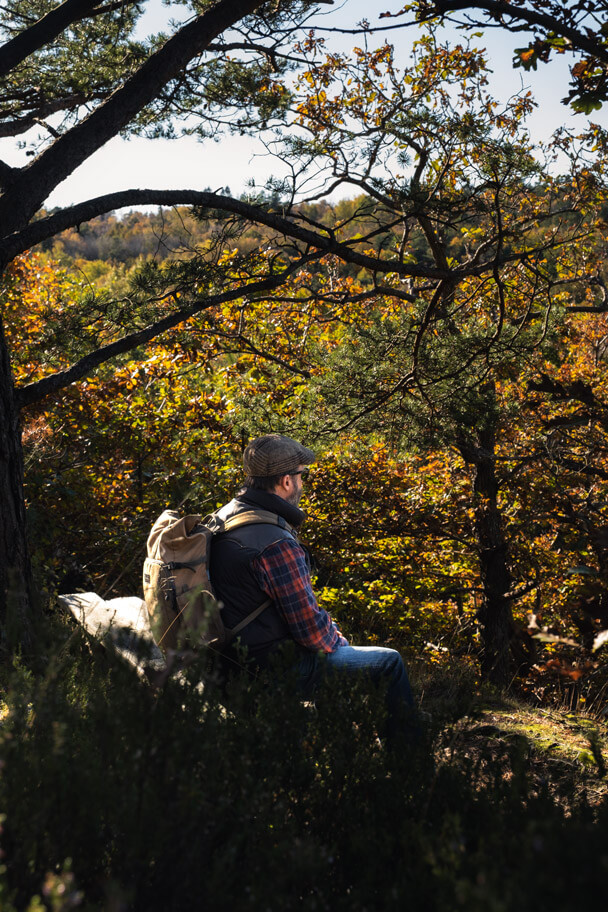
Directly behind the Botanical Garden begins the Änggårdsbergen nature reserve. Here, numerous paths lead through forests, over rocky hills, and past small lakes. Instead of street noise, you now hear birds chirping and the wind in the trees. The proximity to nature is what makes this city so incredibly special and unique. After just a few minutes, you feel as though you have left the city completely behind. Promised!
Depending on where you exit the nature reserve, it is best to take the bus or tram back to the center and let the day wind down comfortably over dinner.
Have you planned a third day in Gothenburg?
You are staying more than two days in Gothenburg, don't worry, you will certainly not get bored! If the weather is good, you should definitely take a trip to the archipelago. An absolute heartfelt recommendation is the island of Brännö. On this small archipelago island, you will find a cute little village with typical Swedish houses, cozy cafes, and restaurants on the one hand, and the Galterö nature reserve on the other, which is ideal for a short hike.
The ferries to the islands are part of the regular public transport system and can be used with a standard Västtrafik ticket.
If you are looking for more tips for Gothenburg, then it is best to take a look at our comprehensive Gothenburg travel guide .
Practical tips for your Gothenburg city trip
Traveling from Germany to Gothenburg
You can reach Gothenburg from Germany in various ways, depending on your budget, time, and travel style. The most convenient way to travel is via Göteborg Landvetter Airport or by ferry from Kiel directly into the city.
A detailed overview of all travel options can be found in our separate article.
From Göteborg Landvetter Airport to the city center
Göteborg Landvetter Airport is located about 25 kilometers outside the city. By bus, you can reach the center in around 25 to 30 minutes.
FlixBus Airport Shuttle
The FlixBus Airport Shuttle* is the cheaper option and runs about every 30 minutes into the city.
Preis: 79 SEK pro Strecke
Flygbussarna Airport Coaches
The classic airport connection is operated by Flygbussarna The buses run about every 15 minutes and offer a bit more luggage space.
Preis: 129 SEK (one way), 198 SEK (both ways)
Arriving by train
Arriving by train to Sweden is becoming increasingly popular and ever simpler. From Germany, you usually reach Gothenburg via Copenhagen and Malmo. Night trains running from Hamburg or Berlin are particularly practical. This way, you travel relaxed overnight and arrive directly in the Swedish west coast metropolis in the morning.
Arriving by car or motorhome
If you travel by car or camper, you have two options: either through Denmark and across the Öresund Bridge, or by ferry from Germany to Sweden.
Particularly comfortable is the ferry connection with Stena Line from Kiel to Gothenburg. The ferry departs from Kiel in the evening, and you wake up the next morning directly in Gothenburg.
Where to stay in Gothenburg?
Since we live here, we have never actually stayed in a hotel in Gothenburg ourselves, but for a weekend trip, we recommend staying in one of the following neighborhoods:
City Center (Inom Vallgraven)
Ideal if it is your first visit to Gothenburg. Many sights and restaurants are right on your doorstep and you can easily reach everything on foot. In addition, you have good connections to public transport, the main train station is nearby, and the airport shuttle also stops at various locations in the city center.
Linné & Haga
An overnight stay in Linné & Haga is also well-suited for a city trip. Here, you will find a variety of restaurants, cafés, and bars, and all the sights are easy to reach as well. Furthermore, Haga and Linné are well connected via the Järntorget stop.
Majorna
If you prefer something a bit quieter and more relaxed, then Majorna is perfect for an overnight stay. In about 20 minutes, you can reach the city center by tram. Here, you will find many great cafés, restaurants, and second-hand shops in the immediate vicinity.
Our tip: For a first visit, we would choose accommodation in Linné, Haga, or the city center. From here, you can easily explore most of this route on foot.
Getting around Gothenburg – How to get from A to B
Public transport
Gothenburg has an excellently developed network of trams and buses. Even the ferries can be used with a standard ticket.
For planning your journeys, we recommend the Västtrafik app. There you will find up-to-date connections as well as information on possible disruptions. You can also buy tickets directly in the app. Alternatively, it is possible to pay with a credit or debit card at the card reader on trams, buses, and ferries. You can usually find these around the entrances. There are no ticket machines in Gothenburg.
If you need assistance, you can find a Västtrafik service center at the main train station. It is best to check opening hours in advance.
By bike through Gothenburg
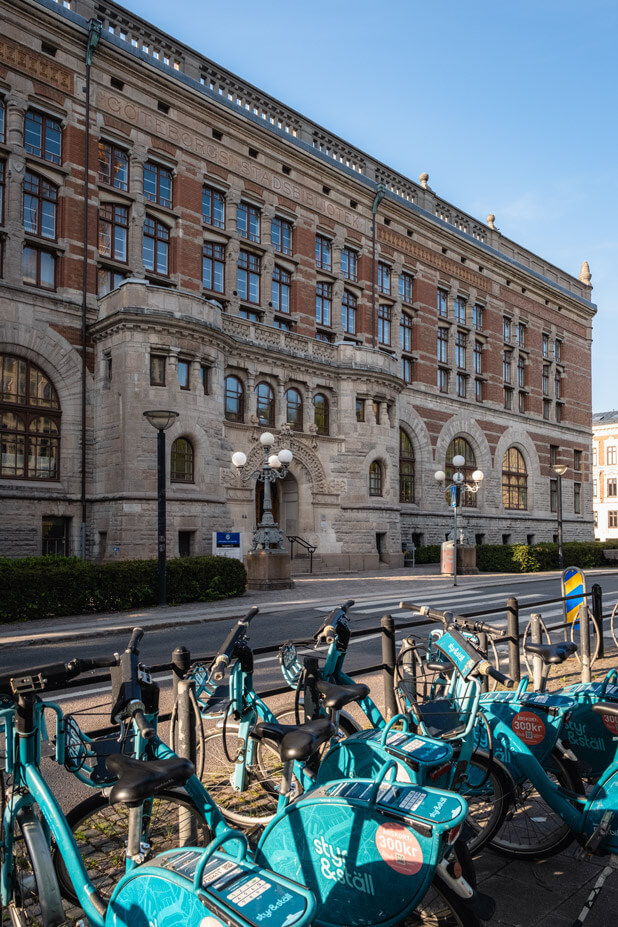
In Gothenburg, the cycle paths are very well developed, making the city excellent to explore by bike. The cheapest option, at 20 SEK for 30 minutes, is the city's bike-sharing system Styr & Ställ. There are numerous stations throughout the city where you can rent and return bikes. To use the service, you need to download the Nextbike app and register.
Alternatively, there are various e-bike and e-scooter providers, such as VOI. These are widely available in Gothenburg and also offer a very good price-performance ratio. Our tip: Check out the VOI passes. For example, there are 30 minutes for 35 SEK or 60 minutes for 65 SEK. Depending on the route, this can be worth it and is often cheaper than using public transport.
Conclusion: Is Gothenburg worth it in 2 days?
Gothenburg can really be explored excellently as part of a weekend trip. Many sights are close to each other, you can explore almost everything easily on foot (if you like), and even with just 2 days, you have the chance to explore both the city center and the green and maritime sides of the city.
We especially love the mix of relaxed cafés, plenty of nature, and the fact that you can easily get everything done here on foot or by bike. With our 2-day itinerary, you will truly discover everything that makes Gothenburg so special to us. All that’s left for us to say is: Have fun!
FAQ for your Gothenburg city trip
2 days are plenty to see the main sights and neighborhoods. If you would also like to visit museums and take trips to the archipelago, you should plan for 3 – 4 days.
Basically, you can travel to Gothenburg all year round, but Gothenburg is at its most beautiful between May and September, when the days get longer and warmer. From November at the latest, it can become very rainy and windy. This itinerary is designed more for the warmer months.
Gothenburg can be explored very well on foot, by tram, or by bike. You can explore a large part of the itinerary on foot.
Generally, the larger cities in Sweden are expensive. You can save money, for example, with special lunch offers available in many restaurants, or you can pick up something from the supermarket for a picnic.