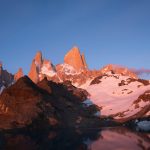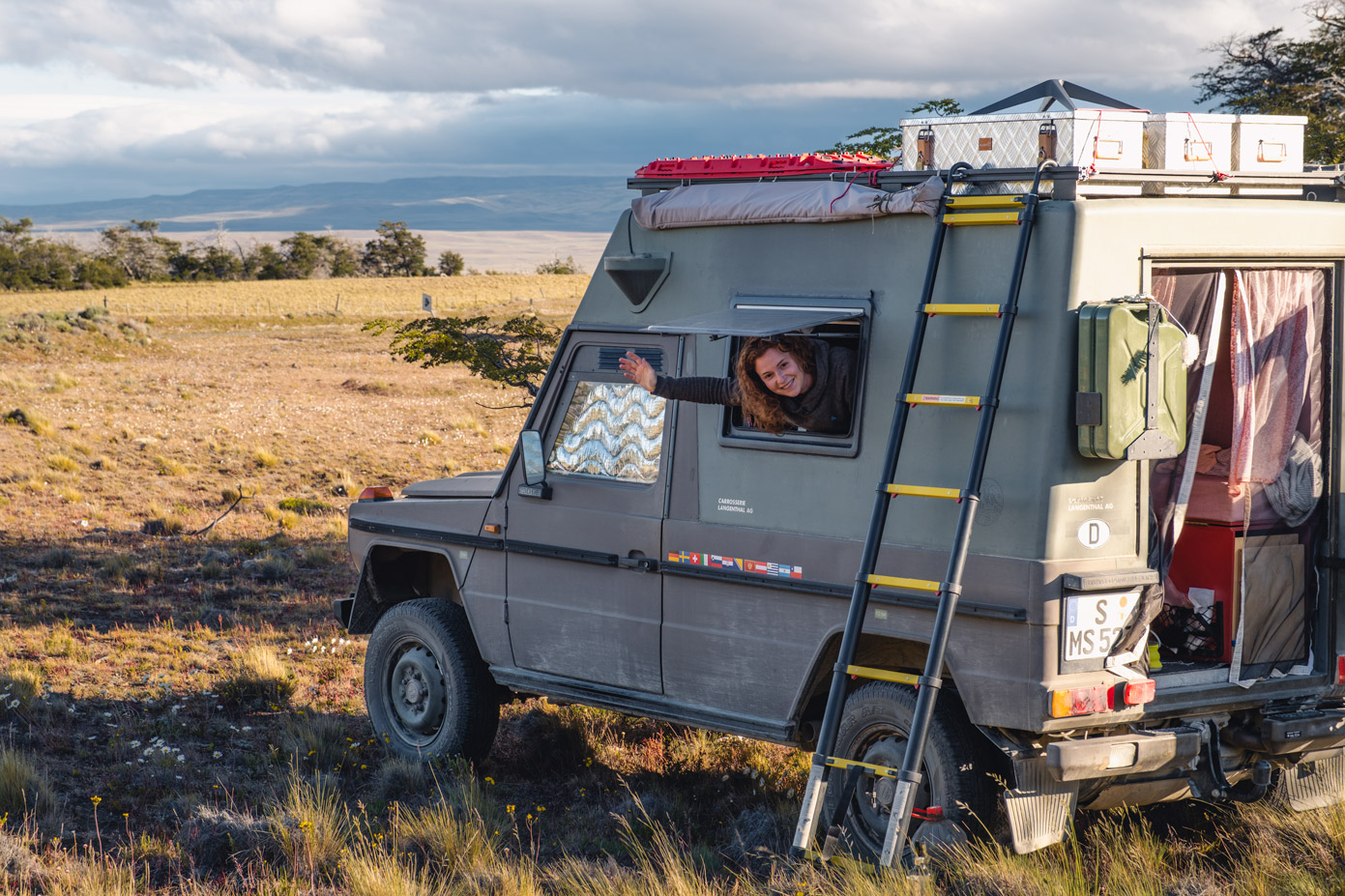
Patagonien, das klingt nach Abenteuer, nach Freiheit und nach spektakulärer Natur. Eine Region, die schon immer irgendwie Fernweh in mir ausgelöst hat. Weite Landschaften, schneebedeckte Gipfel, türkisblaues Wasser, Kondore und Guanacos – so habe ich mir Patagonien vorgestellt. Ganz falsch ist das auch nicht, dennoch gab es einiges, was uns während unseres Patagonien Roadtrips überrascht hat. Vor allem haben wir die Erfahrung gemacht, dass Patagonien rauer und größer ist, als Fotos es zeigen können. Von den unberechenbaren Winden über die endlosen Entfernungen bis hin zu den landschaftlich teils deutlichen Unterschieden zwischen Chile und Argentinien – hier sind 8 Things We Didn't Know Before Our Patagonia Road Trip.
In this article
Der Wind in Patagonien ist extrem
The wind – it is just as integral to Patagonia as guanacos. But the Patagonian winds are stronger and usually permanent. What would already be considered a storm in Europe is simply normal wind and often an everyday occurrence in Patagonia. Setting up a tent, cooking, or flying the drone? All of this quickly becomes an adventure. A pitch with wind protection is often more valuable than a pitch with a view. It was not uncommon for us to meet overlanders with rooftop tents who had slept in their car for several nights because sleeping in the rooftop tent was impossible. Road signs warn of the sometimes strong winds, and they should not be underestimated. During our time in Punta Arenas, a truck tipped over while driving due to the extreme wind.
The distances in Patagonia are huge
My idea of Patagonia was limited to photos, travel brochures, or documentaries, which mostly contained shots from El Chaltén or Torres del Paine. Patagonia is much more than that and stretches for hundreds of kilometers across the South American continent, from the east coast of Argentina to the west coast of Chile. The eastern part, in particular, had little to do with my preconception. Flatland, Patagonian steppe, over which the wind just whistles. What looks close on a map often means many hours of driving through empty, barren landscapes with very few settlements.
4 Seasons in One Day
Four seasons in one day are not uncommon – sun, storm, rain, snow, everything is possible. We had snowfall in January, right in the middle of the Patagonian summer. Dressing in layers with a good shell jacket is an absolute must.
Internet is a Luxury, Not a Given
Patagonia is vast and lonely. Accordingly, the internet coverage is sparse. But even in populated areas like El Chaltén, mobile internet is non-existent or so poor that you cannot rely on it. You should therefore definitely save maps and important information offline, as this can be invaluable on a road trip through Patagonia.
Wild Campsites Are Sometimes Difficult to Find
Patagonia is lonely. Our assumption was that wild campsites would be easy to find, and that was a misjudgment. Especially in the northern part, huge areas are often fenced off, which you drive past for hours without the landscape noticeably changing. If you don't want to park in a ditch, you might have a difficult time. We were never able to figure out the question of what exactly is fenced in or out here. Of course, we also had beautiful wild pitches on our trip through Patagonia, but it is far from being a given – a hint we would have liked to have before our Patagonia trip.
Gas Stations Are Rare and Don't Always Have Fuel
Long distances and lonely landscapes also mean a lack of infrastructure. Especially official gas stations like YPF are few and far between on some routes, and sometimes the distance is too great to manage on a single tank. You can often find small, private gas stations, but the price is significantly higher here (sometimes three times as much). Furthermore, you can never be completely sure that gasoline or diesel is actually in stock. This can be quite a challenge on a road trip through Patagonia. Therefore, you should always carry enough gasoline or diesel to theoretically be able to drive to the next major gas station. This is essential, especially if you are driving yourself through Patagonia. If you can top up along the way, that's a bonus, but don't rely on it.
Washboard Roads Instead of Asphalt
Gravel, washboard roads, and relatively large stones on the road surface – the road conditions in Patagonia are not always the best. On the Argentine side, road conditions can be very poor, even on Ruta 40, one of Argentina's main thoroughfares. Tires, shock absorbers, and especially your own nerves will be seriously tested. We were traveling in a good off-roader and often made very, very slow progress. When the landscape is also rather monotonous and barely changes, it can be quite frustrating. What looks like a good shortcut on the map can turn into a bumpy nightmare. We therefore strongly recommend researching road conditions on iOverlander or, even better, asking for current experiences in WhatsApp groups, for example.
Argentina and Chile – Two Sides of Patagonia
Patagonia is located in both Argentina and Chile. The far larger portion, however, lies in Argentina. The two parts are separated by the Andes, which form a natural border between the two countries. Anyone who switches back and forth between the Chilean and Argentine parts of Patagonia will quickly realize that the two sides are very different. The Chilean part is greener and wetter, especially in the north, because the rain often falls on the western side of the Andes. The roads (especially the Carretera Austral) wind through mountains, rivers, glaciers, and forests. The route through Argentina is often faster, but the one through Chile is usually more scenic.