With an area of 2.8 million km², Argentina is the eighth-largest country in the world. Due to its large north-south extension, Argentina is home to several climate and vegetation zones. A trip through South America's second-largest country is therefore diverse and offers something for every taste. In this article, we present our top 7 most beautiful travel destinations in Argentina.
On the other hand, Argentina's size also presents a challenge when it comes to planning. Even though we spent many weeks traveling in this beautiful country, we weren't able to see everything we wanted to. For example, we didn't make it to Iguazú Falls, as that would have required a detour of almost 2,000 kilometers. Nevertheless, many highlights of our South America trip came from Argentina. Here are our top travel destinations in Argentina that you absolutely shouldn't miss!
In this article
Tierra del Fuego – wild beauty at the southern tip of South America
Catagory: Nature | Outdoor activities | Popular sight / attraction
Tierra del Fuego – for many Pan-American Highway travelers who started in Alaska, Ushuaia marks the southern end of the Pan-American Highway and is thus an emotional highlight of the entire trip. But Tierra del Fuego is also a very special place for us. With Ushuaia, we visit the southernmost city on earth, and from now on, we head steadily north. We spent two and a half weeks on South America's largest island and fell in love with its rugged nature. Those who enjoy hiking will find some beautiful tours here, but the rugged landscape also offers plenty to discover for everyone else.
Tierra del Fuego is one of the most visited regions in Argentina, which is especially noticeable in and around Ushuaia. But the island is large enough to also offer plenty of secluded, remote places to discover, far from mass tourism.
What makes Tierra del Fuego special – highlights at a glance
Hiking in Tierra del Fuego – glaciers, rugged coastlines and breathtaking forests: South America's largest island offers a variety of hikes on both the Chilean and Argentinian sides, leading through diverse and always breathtaking landscapes – from rolling hills and rugged coastlines to challenging mountain trails. Some of the best hikes can be found around Ushuaia. There are both easy and short tours as well as longer and more technically challenging routes. A highlight for us was the 28 km tour to the Jimbo Ice Cave. Check out our article 5 hikes around Ushuaia . There we give you an overview of both easy and more challenging tours.
Tierra del Fuego Nationalpark - Discover Tierra del Fuego: Tierra del Fuego National Park is a paradise for nature lovers. The park's impressive flora and fauna attracts visitors from all over the world. The landscape is characterized by dense forests, tranquil lakes, moss-covered hills, and dramatic coastlines. With a little luck, you might spot foxes, Andean condors, and various bird species such as the Magellanic goose. A particularly popular hiking trail in the park is the Sendero Costera, which runs along the coast. This relatively easy tour leads through a diverse landscape with stunning views of the water and the surrounding mountains. For those who prefer higher ground, Cerro Guanaco offers spectacular panoramic views. For us, it was actually one of the most beautiful views of our trip.
Route 3 leads through the national park and reaches its southern end in Lapataia. Along the way, you'll pass the "Post Office at the End of the World." It's considered the southernmost post office in the world. From here, you can send postcards to family and friends—not exactly cheap.
Beagle Channel – A Window to the Wilderness: The Beagle Channel is not only a major waterway between the Atlantic and Pacific Oceans, but also a beautiful day trip destination not far from Ushuaia. If you're traveling with a camper or tent, you'll find plenty of wilderness spots here, from which you can enjoy views of Puerto Williams, Chile's southernmost village, and watch the cruise ships on their way to Antarctica. From Puerto Almanza, you can take a boat tour to visit sea lions and colonies of Magellanic and Gentoo penguins. You can book these worthwhile tours directly at the port in Ushuaia.
Peninsula Mitre – The wild jewel of Tierra del Fuego: Route J leads to Peninsula Mitre, the tip of Tierra del Fuego. This scenic route runs along the Beagle Channel and ends at a weather station. Peninsula Mitre is one of the most remote areas of Tierra del Fuego and can only be explored on foot. The peninsula is known for its rugged coastline, deserted beaches, and impressive landscapes. A short hike along barely visible paths leads to a lighthouse. From here, adventurers can venture further into the peninsula and, with a tent and plenty of food and water, spend several days completely isolated from civilization. A GPS and a warm sleeping bag are a must!
Tip: Lago Blanco – A hidden gem in the Chilean part of Tierra del Fuego: If you're visiting both the Argentinian and Chilean parts of Tierra del Fuego, we can recommend Lago Blanco. This picturesque lake is a popular destination with the local population, who come to camp and fish. Other tourists rarely venture here, as there's no infrastructure. A hiking trail runs along the lake's shoreline, offering the best views of the rugged landscape. With a little luck, you might spot condors, foxes, and many other animals, and catch a fish or two.
Practical information: costs, best time to travel, and length of stay
Entrance fee to Tierra del Fuego National Park: Entrance fees are only charged for activities within the national park. Many hikes and attractions are located outside the park and are therefore free. Park admission: Adults 1 day: $30,000 (approx. €26) / Adults 3 days: $60,000 (approx. €52) / Children 0-5 years: free (as of April 2025).
Best time to travel: November to March is summer in Tierra del Fuego. Temperatures are higher, days are longer, and there's a better chance of good weather. Average temperatures during these months range between 4 and 13 degrees Celsius. If you enjoy snowshoeing and skiing, you can of course also visit Tierra del Fuego in winter. Temperatures then drop below 0 degrees Celsius.
Wie viel Zeit solltest du einplanen: This is very individual and depends on what you want to see and how much time you have available. We recommend 3-4 days. This gives you enough time to plan various activities, such as hikes, penguin tours, or a visit to the post office.


El Chaltén – Patagonia's outdoor paradise
Catagory: Nature | Outdoor activities | Popular sight / attraction
El Chaltén is considered a mecca for outdoor enthusiasts in Patagonia. Whether you're looking for day trips or multi-day hikes, climbing or alpine tours, you'll find the right outdoor activity here, regardless of your mountain experience and interests. This small town lies at the foot of the famous Fitz Roy massif and attracts adventurers from all over the world. The hike to Laguna de los Tres is one of the most popular day trips in all of Patagonia, and the photo of the Fitz Roy massif and the lagoon is arguably one of the most famous photo motifs in the region. El Chaltén is part of Los Glaciares National Park, the same national park that also includes the Perito Moreno Glacier. Please note that there is no direct connection between El Chaltén and El Calafate, and you will have to drive around the mountain range.
What makes El Chaltén special – highlights at a glance
Laguna de los Tres – spectacular mountain panorama: Most visitors to El Chaltén hike to Laguna de los Tres. No other hike brings you this close to the Fitz Roy massif without stepping foot on the glaciers. The 20 km round trip hike leads along rocky paths, initially climbing slowly. The last 3 kilometers are very steep, but the climb is worth it! The view across the lagoon to the imposing rock massif is one of the most spectacular mountain panoramas. It is particularly special to experience sunrise at the lagoon, when the sun slowly appears and bathes the Fitz Roy massif in magical light. Those who wish can extend the hike into a multi-day tour by adding other tours, such as Laguna Cerro Torre. Designated campsites are available, but they are very crowded.
Hiking paradise El Chaltén – More day hikes and multi-day tours: The Laguna de los Tres isn't the only day hike El Chaltén has to offer. There are also a number of other short and longer tours. These include the popular hikes to Laguna Cerro Torre, Las Lomas, and the shorter tour to Laguna Capri. If you enjoy camping for several days, you can hike the Laguna de los Tres and Cerro Torre as a three-day, two-night tour. This has the advantage of being able to see the lagoons at sunrise. However, the campsites are very full. If you prefer a quieter approach, the Huemul Circuit is a good option. We skipped the five-day tour ourselves due to knee problems, but heard many very positive reviews from others. Information about all hikes is available at the National Park Office at the town entrance.
Climbing, mountain biking, or alpine touring – a paradise for outdoor enthusiasts: El Chaltén is popular with recreational tourists and professional mountaineers alike, as the region has so much to offer. Whether you enjoy hiking, mountain biking, climbing, or ice climbing, all of this is possible in El Chaltén. Information is available at the National Park Office, and equipment can be rented and purchased from El Chaltén agencies. You can also book courses or guided tours here. However, we have found that climbing equipment, for example, is difficult to rent, as equipment is scarce and almost unavailable in El Chaltén due to Argentina's difficult import conditions. It's best to contact them beforehand and inquire.
By the way, the striking Cerro Torre is considered one of the most difficult peaks to climb. Only a handful of people make it to the summit each year. But there are plenty of other peaks to climb and glaciers to cross.
Practical information: costs, best time to travel, and length of stay
Entrance fee Los Glaciares Nationalpark: Adult 1 day: $45,000 (approx. €39) / Adult 3 days: $90,000 (approx. €78) (as of April 2025).
Best time to travel: The best time to travel is in the summer, between November and March. Temperatures during this time range between 4 and 15 degrees Celsius. Pack a rain jacket to protect yourself from wind and rain. Keep in mind that it can still snow, especially in spring and fall.
How much time to plan: El Chaltén is one of the destinations in Argentina where you can easily spend several days. It depends on whether you just want to do a day trip or have several hikes/activities planned. If you only want to hike to Laguna de los Tres, 1-2 days will be sufficient, depending on whether you do the entire tour in one day or spend the night at the campsite and then climb up to the lagoon for sunrise. If you also want to visit Laguna Torre, you'll definitely need 2-3 days. In general, you can say that if you enjoy being out in nature and hiking and outdoor sports are your thing, you certainly won't get bored with a longer stay in El Chaltén.


Perito Moreno National Park – Experience the “real” Patagonia
Perito Moreno National Park is one of Patagonia's hidden gems and will captivate you with its breathtaking natural beauty and pristine scenery. The park offers numerous hiking trails that lead through forests, across vast plains, and along crystal-clear lakes. You're sure to see guanacos, and with a bit of luck, flamingos, condors, and even a puma. Due to its remote location, visitor numbers are limited, making the park one of our insider tips among Argentina's travel destinations. By the way, this national park has nothing to do with Argentina's famous Perito Moreno Glacier. The park and the glacier are 500 km apart and only share their namesake.
Catagory: Nature | Outdoor activities | Insider tip
What makes Perito Moreno National Park special – Highlights at a glance
Breathtaking landscapes and diverse wildlife – a paradise for nature lovers: This is the "real" Patagonia, an Argentinian once told us when we were talking about Perito Moreno National Park. And indeed, this beautiful spot on earth comes pretty close to my idea of Patagonia. Snow-capped mountains, shimmering turquoise lakes, pristine forests, and glaciers – the park offers an impressive backdrop. With 24 mammal species, some of them endemic, such as the Magellanic tuco-tuco and the southern viscacha, as well as 150 bird species, animal lovers will definitely get their money's worth here. With a bit of luck, you might spot the endangered Southern Andean deer and the shy puma. You're sure to encounter guanacos on a hike.
Hiking in peace and seclusion – relaxation and recreation in the wilderness: The park is isolated. The nearest town is 220 km away, and the last 80 km of the drive are particularly bumpy and time-consuming. There are no hotels or comfortable accommodation and there is little infrastructure. Overnight stays are in tents, campers, or simple cabins. Accordingly, few people visit the park, so you'll encounter few to no one on the hiking trails. However, we particularly enjoyed this isolation and tranquility, as we believe like this you can truly experience the beauty of Patagonia here. For us, the park remains a highlight of our entire South America trip.
Free overnight accommodations – nights under the Patagonian starry sky: Those who come to Perito Moreno National Park spend the night at designated campsites, campervan sites, or in one of the many refugios located along the hiking trails. These are free of charge and simply need to be booked in advance via email. Firewood for the stove is provided; you'll need to bring your own food and sleeping bags. The refugios are a wonderful way to spend the night in a secluded, rustic setting, surrounded by nature.
If you are now really interested in Perito Moreno National Park, then take a look at our detailed article Hiking in Perito Moreno Nationalpark . There you will find all the information you need about getting there, hikes, and accommodation.
Practical information: costs, best time to travel, and length of stay
Entrance fee Perito Moreno Nationalpark: Access and overnight stays in the park are free of charge (as of April 2025)
Best time to travel: The national park is open every year from October 1 to April 30.
How much time to plan: Plan at least two full days so you have the option of combining a hike with an overnight stay in one of the refugios. Keep in mind that you'll also need to allow a day to travel to the park and back, depending on where you're coming from.


Perito Moreno Glacier – Patagonia’s most famous glacier
Catagory: Nature | popular sight / attraction
The Perito Moreno Glacier is one of the most famous travel destinations in Argentina. The glacier is a true natural giant and the most famous glacier in Patagonia. Furthermore, due to its accessibility, it is one of the most visited attractions in Patagonia and the most visited glacier in the region. Hardly any trip to Patagonia will miss the Perito Moreno Glacier. With an impressive height of 60 meters and an area of 254 km², the glacier offers a spectacular sight. Wooden walkways and viewing platforms ensure that you have a good view of the glacier and make this attraction easily accessible to everyone. Even though we generally prefer remote and less visited places, the opportunity to see a glacier up close is rare. That's why the Perito Moreno Glacier is definitely a highlight for us and belongs on the list of the most beautiful travel destinations in Argentina.
What makes the Perito Moreno Glacier special – Highlights at a glance
Viewing platforms and paths – consistently good views: Wooden walkways and viewing platforms have been constructed along almost the entire width of the glacier. From these, you have a phenomenal view of the glacier. There are a total of five different hikes, which can be combined in any way you like. The time limits written on the information boards are quite generous, even for less experienced hikers.
The calving of the glacier – when ice masses break into the water with a roar: Calving refers to the breaking off of ice masses from a glacier. When this happens, the ice crashes into the water with a loud roar. This testament to the glacier's active movement can be observed several times a day. The best way to witness this natural spectacle is from the viewing platforms or on a boat tour. We spent about two hours walking along the walkways and platforms and were able to observe, or at least hear, the calving several times.
Calafate Coffee Roasters – Heaven for coffee lovers: Argentina isn't a coffee-growing country; finding good coffee is actually a challenge, as mate tea is the primary drink. While ground coffee can be found in many supermarkets, it's usually of poor quality and mostly contains added sugar. El Calafate is the starting point for glacier visits and is a typical tourist town with restaurants, cafés, and bars. Among them, we believe, is one of the best coffee roasters in South America. Admittedly, a 250g packet isn't exactly cheap at around €17, but if you love coffee, you'll definitely enjoy every sip. Highly recommended!
Practical information: costs, best time to travel, and length of stay
Entrance fee Los Glaciares Nationalpark: Adults 1 day: $45,000 (approx. €39) / Adults 3 days: $90,000 (approx. €78). If you don't have your own vehicle, you'll need to factor in additional costs for shuttle buses, taxis, or a tour from El Calafate to get to the glacier.
Best time to travel: The best time to travel is between November and March. Temperatures during this time range between 4 and 15 degrees Celsius. Pack a rain jacket to protect yourself from wind and rain.
How much time to plan: If you just want to see the glacier on a short hike along the wooden walkways or a boat tour, one day is enough.


Peninsula Valdés: A paradise for nature lovers
Catagory: Animals | Nature | Popular sight / attraction
Peninsula Valdés is one of Argentina's most visited destinations and is an absolute highlight and a must-see for all nature and animal lovers. The peninsula is one of South America's most important animal reserves. Between June and December, southern right whales gather here, giving birth to their young in the protected waters around Valdés and raising them for the first few weeks. Peninsula Valdés is also known for the very special hunting behavior of the orcas, which come to the coast when the sea lions have their pups. You can find out when and where you can see which animals in the Animal calendar of the nature reserve .
What makes the Peninsula Valdés special – Highlights at a glance
Whale Watching – Watching whales off the shore of Peninsula Valdés: Puerto Pirámides is the only village on the peninsula and the ideal starting point for whale watching in the nature reserve. Boat tours lasting approximately one hour depart from here, allowing you to experience southern right whales up close. The calm waters surrounding the peninsula provide optimal conditions for the whales and their young. Peninsula Valdés is considered one of the best places in the world to see whales in their natural habitat. Experienced guides will give you fascinating insights into the life and behavior of these impressive animals. For more tips on tours and wildlife-friendly whale watching, check out our article: Whale watching on Pininsula Valdés.
Sea lion and elephant seal colonies: In addition to whales, Peninsula Valdés is also home to colonies of large sea lions and elephant seals. These can be found primarily on the beaches of Punta Norte and Caleta Valdés. From observation platforms and wooden walkways, you can observe the animals sunbathing, engaging in territorial fights, and raising their young.
Watching orcas hunting – intentional stranding: In March and April, as well as in September, you can see orcas off the coast of Valdés. The orcas' hunting technique is particularly spectacular in March and April, when the sea lions are having their pups. The animals intentionally strand to hunt the young sea lions learning to swim in the surf. This spectacular natural spectacle attracts biologists, wildlife filmmakers, and interested travelers. This particular hunting technique is unique and occurs only with the orcas that live here. You can find information on when the orcas were last seen on the coast on the reserve's website and social media platforms.
Magellanic penguins – curious little companionsPenguin season on Valdés Island lasts from September to the end of April. During this time, you can observe Magellanic penguins. The colonies at Punta Tombo (south of Valdés Island) and the colony on Valdés Island itself are among the largest Magellanic penguin colonies in the world. Some of the animals can be observed at the public viewing point at Punta Cantor. If you want to catch a glimpse of the large colony, you'll need to take a paid tour at Estancia San Lorenzo.
Practical information: costs, best time to travel, and length of stay
Entrance to the nature reserve: Adults: $30,000 (approx. €26) / Children 6-11 years: $15,000 (approx. €13) / Vehicle with up to 5 seats: $1,700 (approx. €1.50) (as of April 2025).
Best time to travel: It all depends on which animals you would like to see. In principle, Valdés is worth visiting year-round. However, if you want to observe specific animals, such as whales, then it's worth taking a look at the Animal calendar of the nature reserve .
How much time to plan: We recommend planning at least two days, so you could, for example, go whale watching on the first day and visit penguin and sea lion colonies on the second. If you're keen to see orcas, you'll need to be flexible with your time, as they're not seen on the coast every day.


Puna de Atacama – Colorful road trip through the desert, along salt lakes and to impressive mountain landscapes
Kategrorie: Nature | Insider tip | Road trip
The Puna de Atacama is a remote high plateau in northwestern Argentina. Here, for the first time, we are traveling for several days at altitudes above 4,000 meters. The landscape in the Puna is fascinating, characterized by aridity and sparse vegetation. It is a unique backdrop of vast salt flats, colorful lagoons, and impressive volcanic rock formations. The Puna is one of the most remote areas in Argentina. Anyone who wants to visit here has to drive themselves, but a four-wheel drive is not absolutely necessary. This makes the Puna ideal for adventurous travelers. You will still encounter people here, as there are several mines, and the Puna is home to some of the largest lithium deposits in the world. Even though you will certainly see the occasional truck in the Puna, the Puna remains a beautiful, remote, and lonely travel destination in Argentina.
What makes the Puna de Atacama special – Highlights at a glance
Salar de Antofalla – white desert and colorful eyes: The Salar de Antofalla is one of the largest salt flats in the world. The seemingly endless white expanse stretches for several kilometers, framed by reddish rock formations and volcanoes. In some places, openings have formed in the salt crust, so-called ojos. These shimmer in turquoise, red, or green, adding color to the white surface. Despite the extreme conditions surrounding the Salar, you will find scattered bushes, vicuñas, and several bird species that find food here despite the hostile conditions.
Cono de Arita – the perfect volcanic cone: The Cono de Arita is one of the most striking landscape landmarks. This perfectly formed volcanic cone rises spectacularly from the salt pan, surrounded only by salt mud. The Cono de Arita is hard to miss. If you're traveling in the area, you'll see it from afar. Up close, it makes for a spectacular photo opportunity.
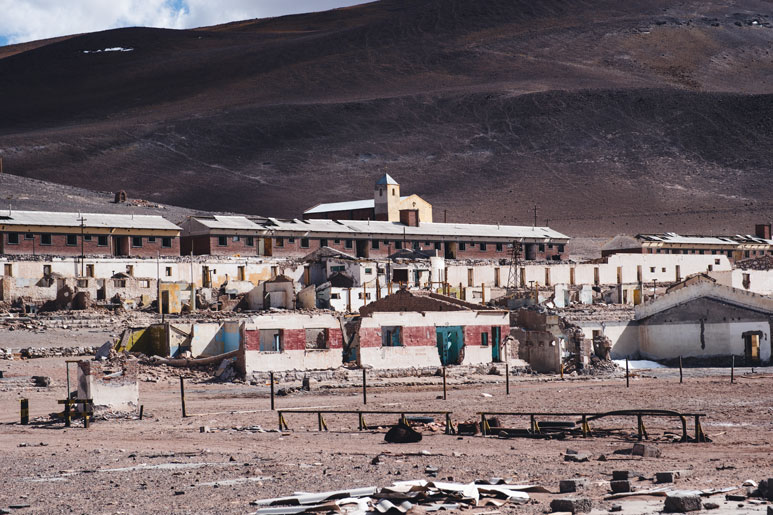
La Casualidad and Mina Julia – contemporary witnesses of old mining history: If you are traveling with your own vehicle and are feeling adventurous, you can drive to the old mining settlement of La Casualidad and the disused mine Mina Julia. At its peak, La Casualidad was once home to around 4,000 people; today, only the old buildings bear witness to the former mining activities and life here. The settlement closed in 1979 and is now a ghost town. Sulfur was mined at Mina Julia at an altitude of 5,200 meters and transported by cable car to La Casualidad, where it was further processed. The mined material was then transported further from the nearby train station. La Casualidad lies at an altitude of just under 4,200 meters; the road to Mina Julia is largely in good condition, as the first section is still used by trucks to transport material from other mines. The area is considered one of the driest in the world, but unfortunately we had snow for two days in a row, so snowdrifts at 5100 meters blocked the last 3km to Mina Julia.
Isolation and solitude – away from the tourist hotspots: The Puna de Atacama is one of the most sparsely populated regions in Argentina. Mining is and always has been the main activity here. Many of the old settlements, mines, and railway lines are now closed, but the lithium found in the ground is currently bringing some resurgence to the region. For us, the Puna primarily means beautiful routes, fascinating views, and wild campsites in a landscape that almost feels like you've landed on another planet. The climate should not be underestimated. The wind is icy, and at night it can get bitterly cold depending on the altitude. You should also definitely acclimatize to the altitude before spending several days here. The isolation and solitude also mean that food and fuel are hard to find. Sufficient water, food, and gasoline/diesel are therefore an absolute must. However, if you dare to embark on the Puna de Atacama adventure, you will discover one of the most impressive regions in South America. We didn't meet any other tourists.




Practical information: costs, best time to travel, and length of stay
Costs: No entrance fees
Best time to travel: The best time to visit is roughly between October and May. Temperatures are more pleasant during this time. However, it can get quite cold, especially at night. Even though the area is considered very dry, we had two days of snowfall in April.
How much time to plan: We recommend at least three days to complete the entire route. If you'd like to deviate a bit from the main route and explore places like Mina Julia, you'll need to allow a little more time.
RP 34 – Off-road adventure via Las Papas to Campo de Piedra Pómez
Catagory: Nature / Insider tip / Road trip
We prefer small, quiet mountain roads and enjoy off-roading. The RP 34 in northwest Argentina, from Fiambalá to Campo de Piedra Pomez, is certainly one of the most beautiful routes we've traveled. Admittedly, this Argentinian destination is only suitable for self-drivers, and a four-wheel drive is a must, but we still don't want to leave this impressive route unmentioned. If you'd like to learn more about the route, we've summarized it all in this article: RP 34 Argentina – Off-road from Fiambalá through Las Papas to Campo de Piedra Pómez
What makes a roadtrip on the RP 34 special – Highlights at a glance
Campo Piedra Pómez - waves in the sand: The Campo de Piedra Pómez is either the start or end point of the route. It mainly attracts nature enthusiasts, photographers and people who like to get away from the main attractions. We saw no more than 10 people here. The nearest town is Antofagasta, where you might also find tours to the Campo de Piedra Pómez. The approach is over a washboard road and is strenuous. You will be rewarded with a unique landscape. It is best described as a sea of pumice. Especially from a bird's eye view, the rock formations look like waves in the sand. One of the strangest, most impressive and unusual travel destinations in Argentina.
Termas Los Hornos – relax in nature: On the RP 34, you'll pass the Termas Los Hornos hot springs. A small road winds its way up to the hot springs at 3,500 meters. The springs are completely natural. Mineral-rich water, up to 90 degrees Celsius, bubbles from small "volcanoes" and mixes with the small stream, creating a pleasant bathing temperature. While on the RP 34, you should definitely take the turnoff to the thermal baths and relax there for a while before continuing your journey. For us, they remain a highlight of the entire trip.
Varied landscape: You'll need about 2-3 days for the route, depending on how fast or slow you want to travel. What makes this route a highlight among all our 4x4 routes to date is the diverse landscape. While the first section leads through a dry riverbed, beautiful mountain roads with scenic viewpoints follow, followed by sandy, barren lunar landscapes at over 4,000 meters in altitude. This diversity makes each stage of the route a new experience and offers a truly diverse roadtrip.
Practical information: costs, best time to travel, and length of stay
Costs: No entrance fees
Best time to travel: The best time to travel is approximately between October and May. Temperatures are more pleasant during this time. The route starts in Fiambalá at an altitude of 1,500 meters and climbs to over 4,600 meters. The climate varies accordingly. Especially at higher elevations, it can get very cold at night. It is also often stormy. Check with the locals in advance to see if the Fiambalá-Las Papas route is passable. Generally, the riverbed should not be navigated in the rain.
How much time to plan: To drive the entire route, we recommend at least three days. This allows for a relaxed drive and still offers time to visit the Termas los Hornos.


Conclusion on the most beautiful travel destinations in Argentina
Argentina is a country full of breathtaking landscapes, rich culture and fascinating wildlife and it is big, really big. That means that you probably won't be able to see everything you want to, but it also means that Argentina really has something for everyone! Whether you like being out in nature, love city breaks, or prefer warmer or cooler climates - you are sure to find what you are looking for in Argentina. To date, some of our absolute favorite places of our entire South America trip are in Argentina. Besides the beautiful places, we remember the warmth and seemingly endless friendliness of the people most. And even though we spent many weeks traveling the country, we still have plenty of destinations on our list that we would like to visit next time. Due to the size of the country, we advise you to plan your trip carefully in advance. The large distances between the sights require a bit of preparation so that you can get the most out of your vacation in Argentina.